
Planting as Composition
Inspired by the ideas within Flower Power: Designing Gardens for Year Round Wonder, this piece reflects on gardens as living compositions
Planting a garden is often spoken about as a practical act, selecting species, preparing soil, arranging plants into the ground. But beneath these physical actions sits something far more creative and expressive. A planting is a composition: an arrangement of texture, movement, colour, form and seasonality unfolding through time. Like music or painting, gardens rely on rhythm, contrast, repetition and perspective. They are living artworks, shaped not only by the plants themselves, but by the relationships formed between them.
In Flower Power, the chapters Composing Communities and Laying Out a Planting explore this idea of planting as both horticultural practice and creative process. Rather than approaching plants as isolated specimens, the book encourages gardeners to think in terms of communities, layered, interdependent plantings that create atmosphere, succession and complexity within the garden.
A typical planting composition may include ground covers at the front, medium shrubs through the middle and taller structural species rising behind. Yet within this framework there is room for surprise and softness. A low perennial may suddenly send up a vertical flowering bulb. A self-seeded annual might weave unexpectedly through neighbouring plants. As seen in the image below, layered planting creates gardens that feel immersive and alive, unfolding through subtle moments of curiosity, texture and discovery.
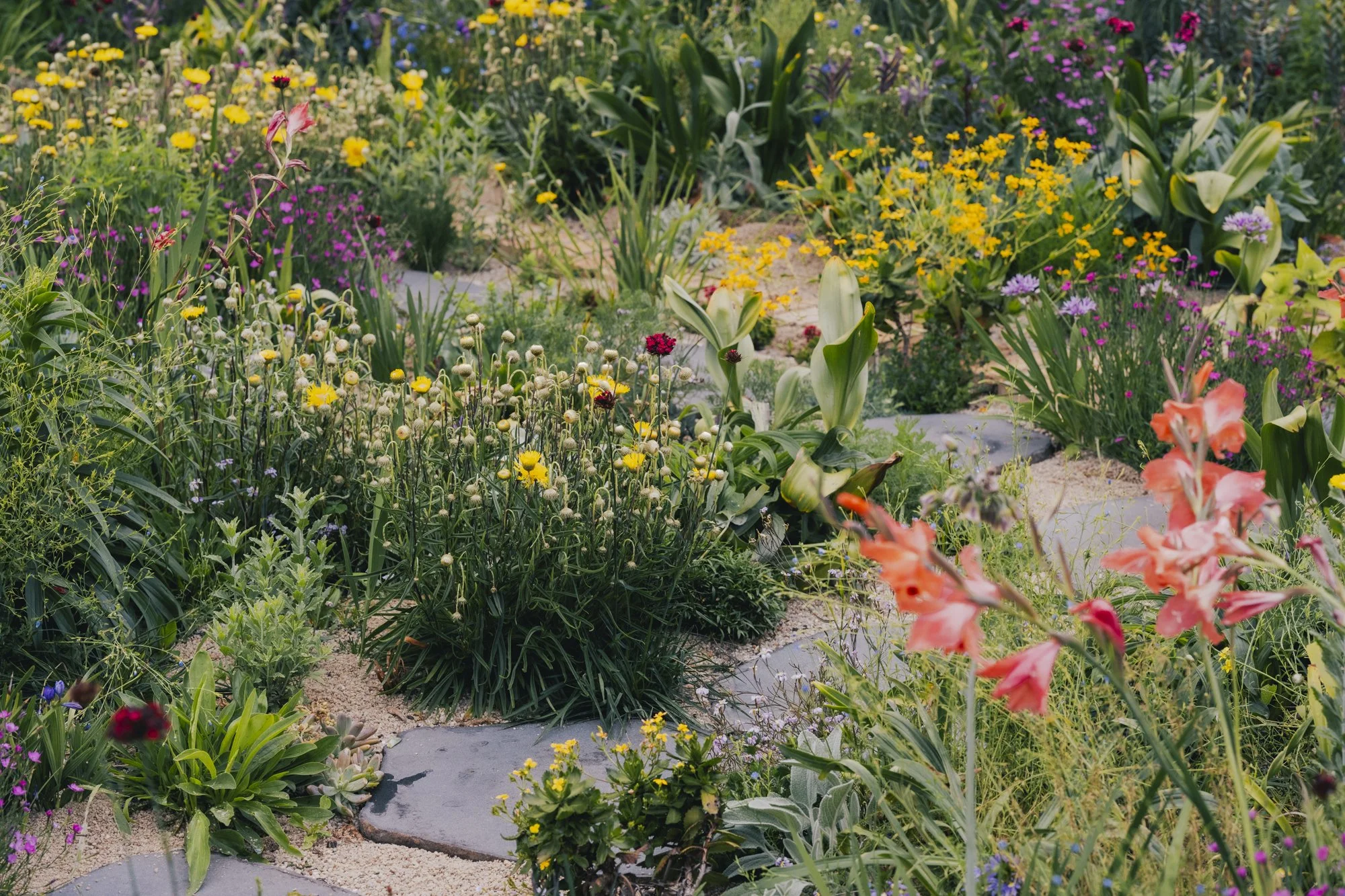
The layers and considerations that come to play with planting. Photography by Sarah Pannell.
Central to this way of thinking is the idea that every plant performs a role within the composition. Some are bold and theatrical, others quiet and supportive. Some hold the structure of the planting together while others arrive fleetingly, offering a brief but unforgettable seasonal moment.
Flower Power: Designing Gardens For Year Round Wonder describes this through three distinct planting characters: the Flower Hero, the Support Act and the Camouflage plant.
The Flower Hero is the main character of the planting, the species that draws the eye and anchors the emotional tone of the garden. These are the plants with undeniable presence: perhaps a luminous Kangaroo Paw catching afternoon light, a flowering Salvia alive with pollinators or a singular bloom that becomes the visual focal point of the space. Yet heroes do not perform alone. Their beauty becomes more powerful when supported by quieter companions.
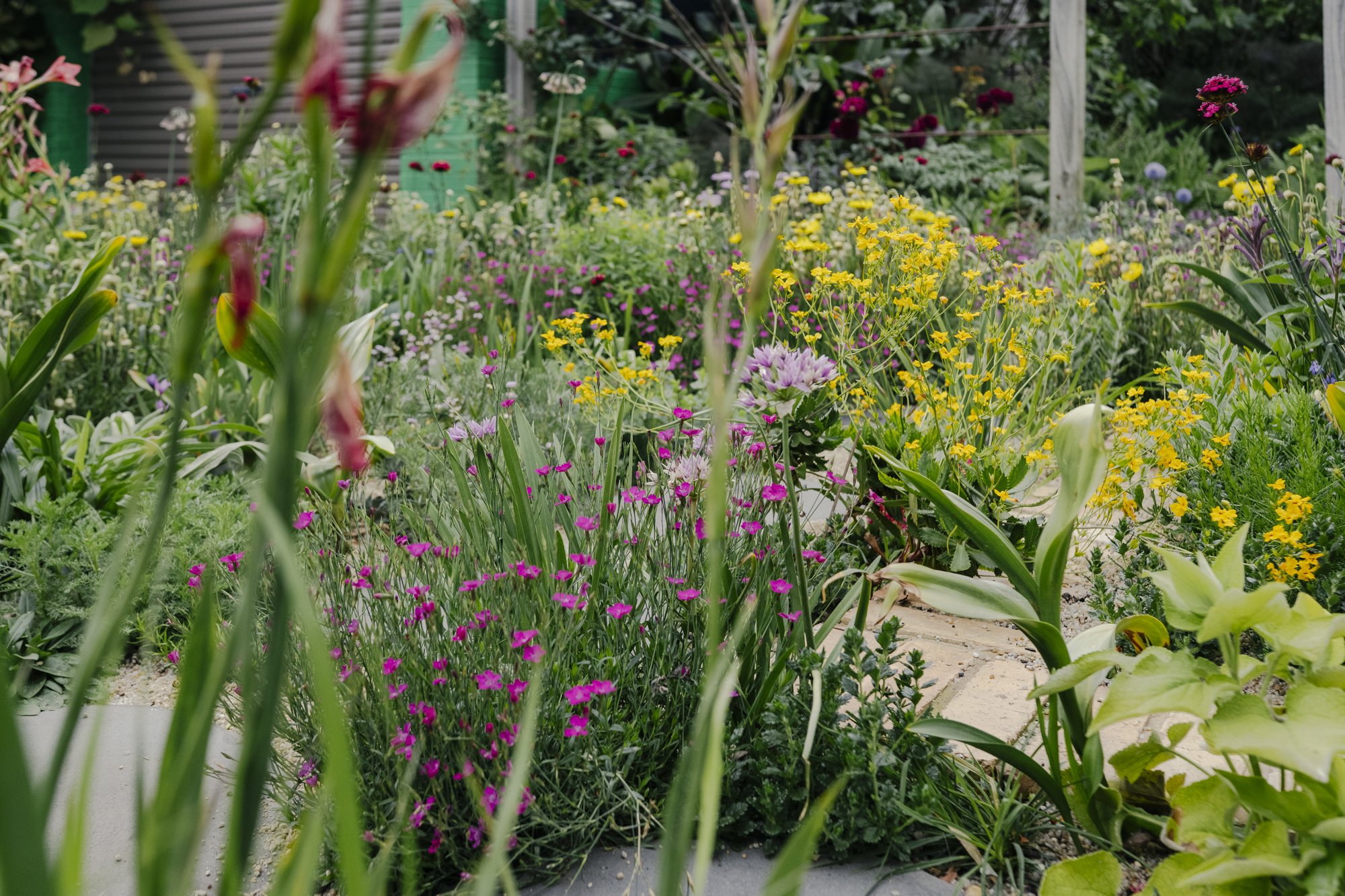
A thoughtfully composed garden with cultivated layers of planting. Photography by Sarah Pannell.
Support Acts provide this accompaniment. They may flower more subtly or contribute through texture and foliage rather than spectacle, but they create the conditions that allow hero plants to truly shine. Like the supporting cast in a performance, they deepen the richness and continuity of the composition. A planting made entirely of stars can feel overwhelming; it is contrast and restraint that create rhythm.
Then there are the Camouflage plants, perhaps the most overlooked but most essential layer within the garden. These plants cover soil, suppress unwanted weeds and soften the spaces between larger species. They help create a connected tapestry of planting rather than isolated individual specimens surrounded by mulch. Camouflage plants also conceal the declining foliage of seasonal plants entering dormancy, allowing the planting to move gracefully through cycles of growth and retreat.
Together, these layers create planting communities that function ecologically while also carrying emotional and aesthetic resonance. The garden becomes less about singular plants and more about relationships between them.
This relational thinking extends into the process of laying out a planting before installation. Often overlooked, layout is one of the most creative stages of garden making. It is the moment where a planting design begins to move from concept into lived space, where plants can be rearranged, rotated and tested against one another in real time.
The book introduces the idea of ‘lines of beauty’, the key perspectives from which the garden will most often be viewed and experienced. Marking these lines out within the space helps anchor the composition, ensuring the planting feels intentional from multiple viewpoints. Gardens are not experienced from above like drawings on a page. They are encountered through movement, perspective and changing light. A successful planting considers not only what plants are included, but how they are seen.
Even the orientation of individual plants matters. Plants are rarely perfectly symmetrical; many possess what could almost be described as a ‘face’, an angle from which their branching structure, movement or flowering is most expressive. Rotating a plant slightly before planting can completely alter its relationship to the surrounding composition.
Importantly, layout also asks gardeners to think beyond the present moment. Plants should not be positioned according to their current pot size, but according to how they will grow and expand over time. A small shrub may eventually become the dominant structure within the planting, while a bulb may emerge briefly and disappear again with the seasons. Planting design therefore becomes an act of imagination, composing not just for now, but for the future garden still unfolding.
And perhaps this is what makes planting so compelling. Gardens resist perfection. They evolve continuously through weather, growth, maintenance and chance. Plants self-seed into unexpected spaces, compositions shift and conditions change. The most meaningful gardens are rarely static or tightly controlled; they are responsive, adaptive and alive.
To compose with plants is to work with time itself, to create living communities that change, settle and surprise us season after season.
Signed copies of Flower Power: Designing Gardens for Year Round Wonder are available here.