
Planting as Optimism
Why planting a meadow is an act of patience, imagination and optimism for the future
There is something inherently optimistic about planting. To place a seed into the ground is to believe in a future you cannot yet see. It is an act grounded in patience, trust and imagination, a quiet insistence that beauty, abundance and transformation are possible, even if they arrive slowly. Gardens ask us to participate in time differently. They encourage attentiveness to subtle shifts, to seasonal rhythms, to the invisible work unfolding beneath the surface. In this way, planting becomes more than a garden. It becomes a gesture of hope.
At the Abbotsford Convent meadow, this optimism is cyclical. Soon, the meadow will be re-seeded, breathing new life into the site, nurturing more species and preparing it for a future season of flowering. The process itself is both practical and poetic. Re-seeding acknowledges that living landscapes are not static installations but evolving systems, continually moving through phases of emergence, decline, dormancy and renewal. Opportunity awaits as the meadow is never truly finished. It is always becoming.
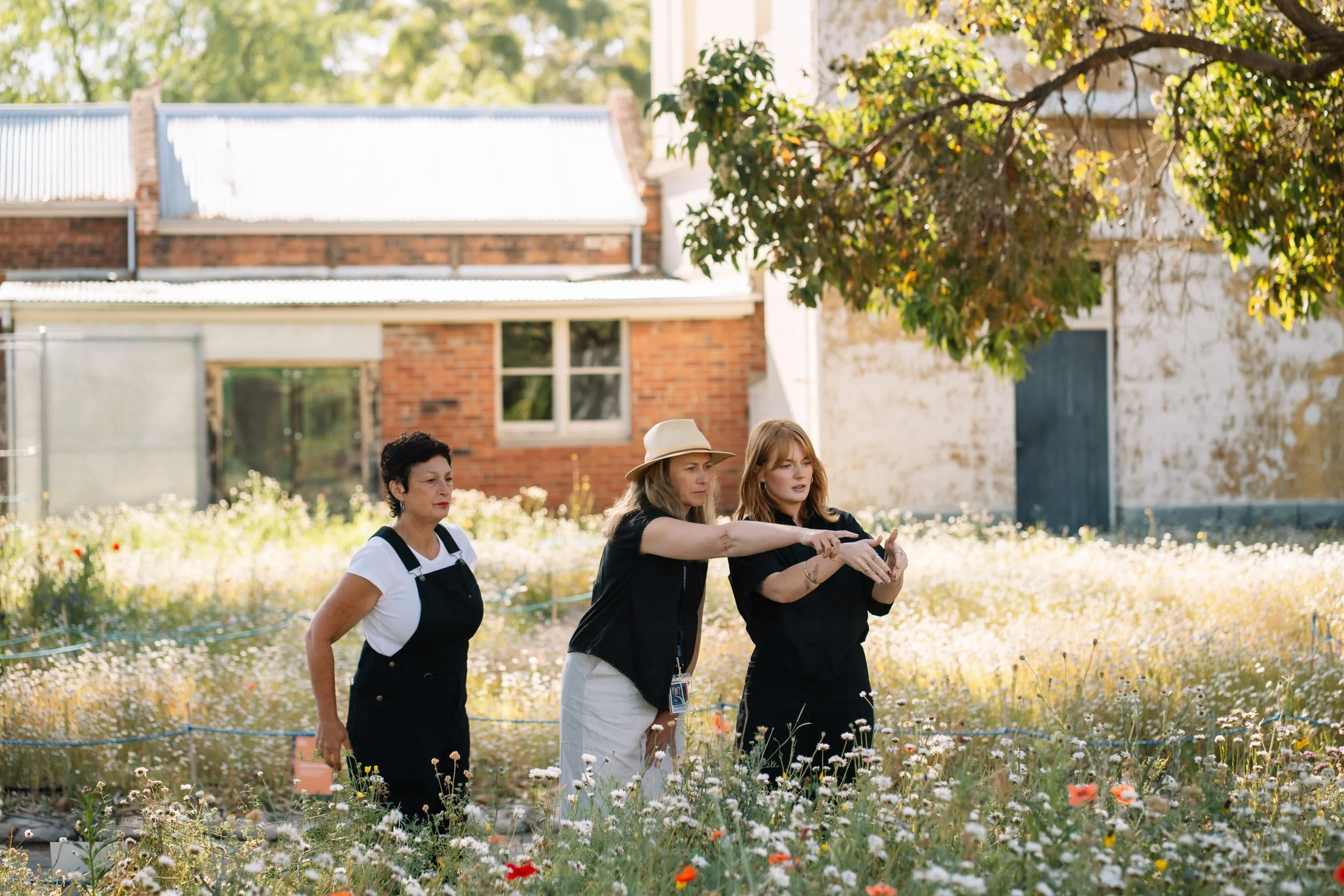
Seed heads and flowers intermingle. Photography by Phoebe Powell for Abbotsford Convent.
This ongoing stewardship forms an important part of the project’s identity. While meadows often appear wild or effortless, they require careful seasonal management and gentle intervention. There is a responsibility involved in tending living systems, reading the landscape, responding to weather patterns, observing what thrives and what retreats. Stewardship is less about control and more about relationship. It asks for attentiveness and reciprocity; a willingness to evolve alongside a place rather than impose upon it.
At certain times of year, the meadow erupts into a full flush of flowers, dense with colour, movement and pollinator activity. At others, it appears quieter. Seed heads dry, stems soften, growth slows. Yet these quieter moments are not absences. They are periods of preparation. Beneath the soil, root systems continue to expand, microbial life remains active, seeds settle themselves into the ground awaiting the right conditions to germinate. Living systems are constantly in motion, even when they appear still.
There is a lesson in this: process over perfection. Contemporary culture often seeks immediacy, permanence and peak condition, yet meadows resist this expectation. They remind us that beauty can exist within transition. That dormancy has value. That cycles of rest are not failures but necessary parts of regeneration. The meadow’s changing appearance across seasons becomes a visible expression of time, one that asks viewers to appreciate fluctuation rather than fixed outcomes.
The meadow also demonstrates how profoundly planting can shape emotional experience. Light moves differently through tall grasses and flowering perennials. Wind animates the site. Shadows shift across stems and petals throughout the day. In the late afternoon, the entire landscape seems to glow. These interactions between plants, weather and light create moments of softness and wonder that alter how people encounter a place. The meadow offers atmosphere as well as a symbolic greeting at the gates of the Convent.
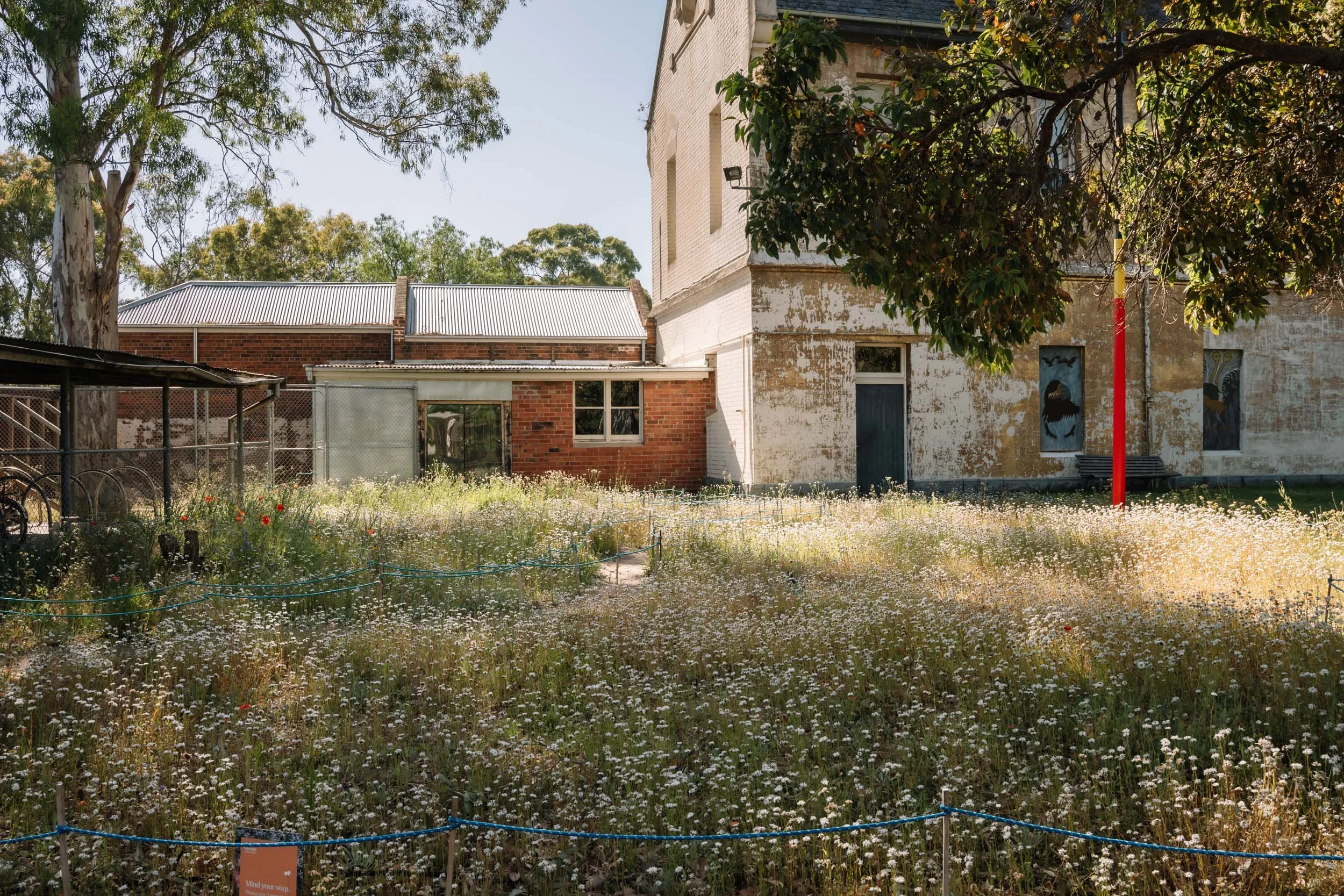
An ever changing tapestry of flowers, the meadow is an act of hope. Photography by Phoebe Powell for Abbotsford Convent.
Importantly, its impact extends beyond human audiences. Bees gather densely among flowering species. Birds forage through seed heads. Insects disappear into stems and foliage. The meadow becomes habitat, refuge and food source alongside public space. It is living infrastructure, supporting biodiversity while simultaneously creating beauty and delight for the people who move through it.
And people do move through it in deeply varied ways. Some pause quietly to admire it, photographing flowers or observing insects at work. Children run alongside its edges, drawn instinctively toward movement and colour. Others visit in the evening, wandering curiously through the planting with a sense of playful trespass. Though sections are cordoned off, flowers are often picked and carried away, an interaction welcomed rather than discouraged. These gestures reveal something important about public landscapes: once released into the world, they become shared cultural spaces, shaped as much by public interaction as by design intent.
Perhaps this is part of the meadow’s success. It does not ask for passive observation. It invites participation, curiosity and emotional response. The project has demonstrated that people are deeply hungry for encounters with beauty, particularly beauty that feels alive, accessible and slightly unpredictable. Nothing is more unpredictable than a blooming meadow in an urban environment.
What makes the Abbotsford Convent meadow especially significant is that it emerged from relatively modest means. It is, in many ways, a low-fi project, realised without expansive budgets or excessive infrastructure. Yet its impact has been immense. This speaks to the power of collective imagination and collaborative effort. When people come together around a shared vision, even limited resources can produce landscapes of remarkable cultural value.
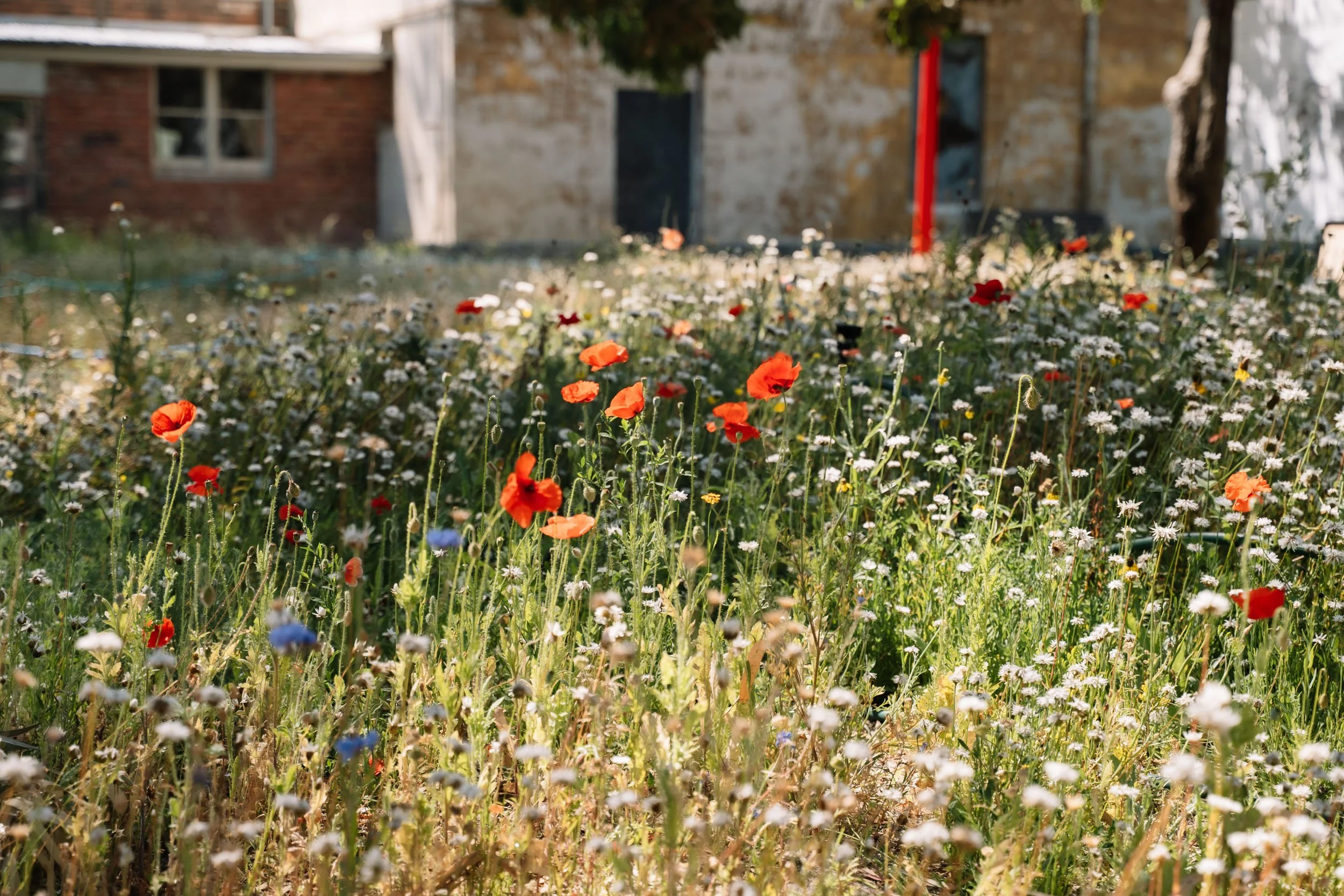
A sea of flowers, with poppies blooming abundantly. Photography credit Phoebe Powell for Abbotsford Convent.
There is optimism in this too. The meadow suggests that meaningful transformation does not always require grand gestures or monumental investment. Sometimes it begins with a seed mix, a patch of open ground and a willingness to experiment. It begins with believing that places can change, that beauty can be cultivated, and that communities can gather around living things.
Gardens and meadows are never fixed objects. They are living, breathing and changing entities, shaped continuously by climate, care, time and human interaction. Their impermanence is not a weakness but their greatest strength. To plant a meadow is to accept uncertainty while choosing to create anyway. It is to trust that something worthwhile may emerge from patience, attention and collective care.
In this sense, planting remains one of the most optimistic acts of all.
The Abbotsford Convent is open 365 days a year, see the meadow and find out more here.