
Public revelry: Seeing is believing. the role of demonstration for future planting
At the recent Melbourne International Flower and Garden Show, Super Bloom’s Plant Futures unfolded as both garden and invitation. A living, breathing argument for a more generous, plant-led approach to design. Set within the historic grounds of Carlton Gardens, the project invited designers, collaborators, and the public alike into a space where planting was not background, but the main event. Abundant, immersive, and unapologetically joyful.
There is something transformative about encountering planting at full scale. Plant Futures leaned into this idea of demonstration as advocacy. Super Bloom’s maximalist language of dense, textural, and overflowing created a sensory experience that could be felt as much as seen. Flowers brushed against legs, bees flocked to the blossoms, and light filtered through foliage in a way that felt almost dreamlike. Here, planting became atmosphere.
For many in the design industry, the garden offered a moment of clarity: this is what planting can do. Seeing is believing. It made a case not through words, but through immersion, demonstrating how plant-driven places can hold emotion, create memory, and shape how people gather and move. It asked us to reconsider hierarchy - what happens when planting leads, and everything else follows?
Plant Futures felt open both physically and ideologically. It welcomed industry peers, collaborators, and curious visitors into the process and the outcome. Super Bloom extended an invitation: come closer, look deeper, imagine with us. The garden became a shared language between horticulturalists, designers, and the public, grounded in a collective experience.
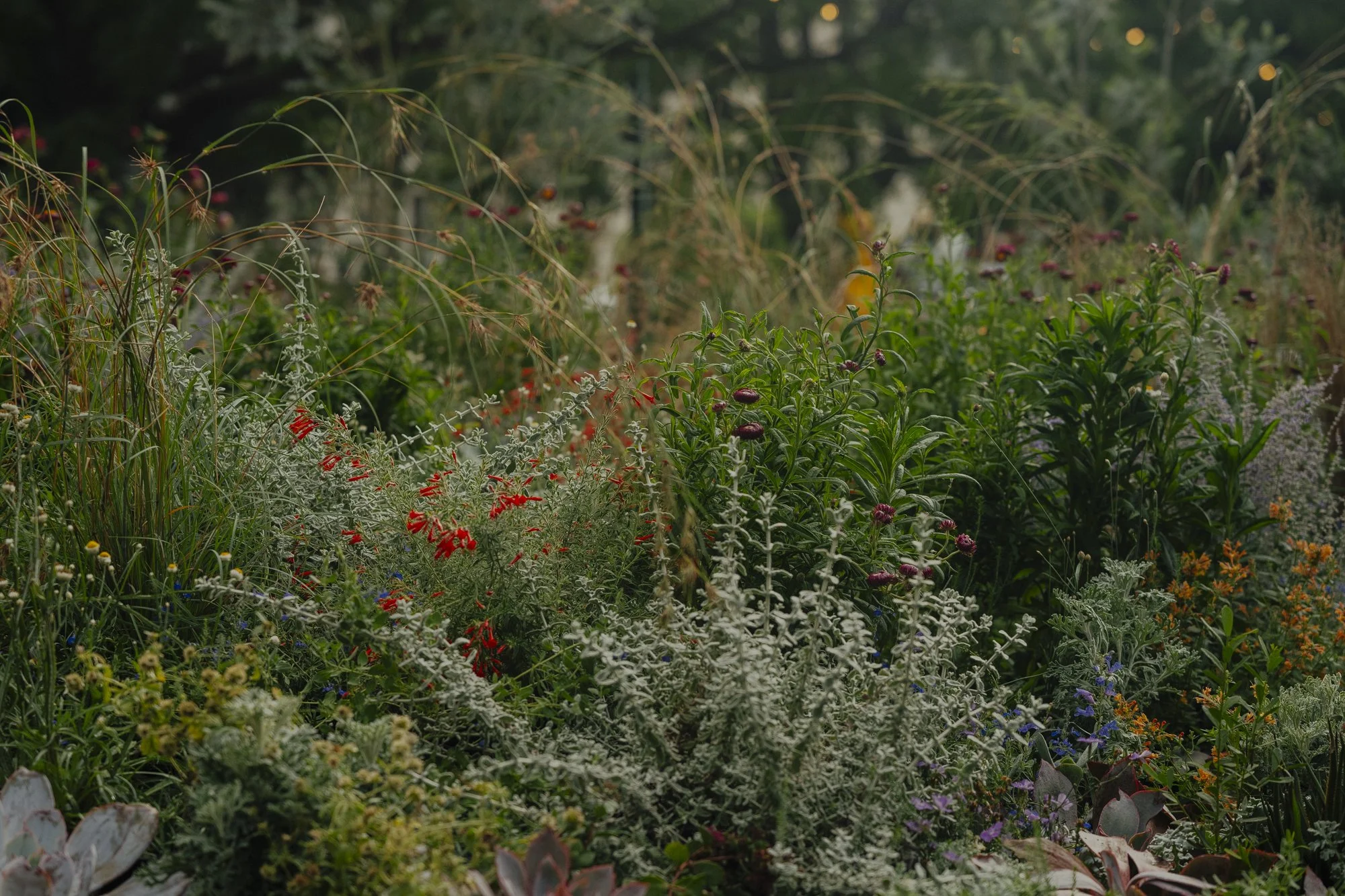
While cultivated and grown for the show, Plant Futures was never intended as a static installation. Its life extends beyond the event. It is a garden designed to move, to transition, and to embed itself into the public realm. This approach reflects a core Super Bloom value: plants are not temporary decoration, but living systems with ongoing purpose. The pause at Melbourne International Flower and Garden Show is part of a longer story, one that continues on in a public space in Footscray.
Super Bloom operate not just as designers, but as horticultural show runners, orchestrating a complex, living composition at scale. The Plant Futures garden was a testament to deep plant knowledge, careful cultivation, and an intuitive understanding of how species interact over time. But just as importantly, it was brought to life by a team fluent in plant language, warm, generous, and deeply engaged. Conversations unfolded in and around the garden: about growth, seasonality, maintenance, and possibility. These exchanges became part of the work itself.
At its heart, Plant Futures reinforces a simple but powerful idea: planting can lead. Super Bloom’s practice centres plants not as an accessory, but as the foundation of place-making. In this garden, structure, movement, and emotion all stemmed from the planting palette. A choreography of colour, form, and rhythm that created a place people didn’t just pass through, but lingered within.
In a time when cities are searching for softer, more responsive ways to grow, Plant Futures offers a glimpse of what’s possible. Not a distant vision, but something tangible. Something you can step into. Something you can feel.
Find out more about Plant Futures: The Future in Bloom with this case study.