
The Golden Character Of Winter
How wattles illuminate a season that is distinctly Australian
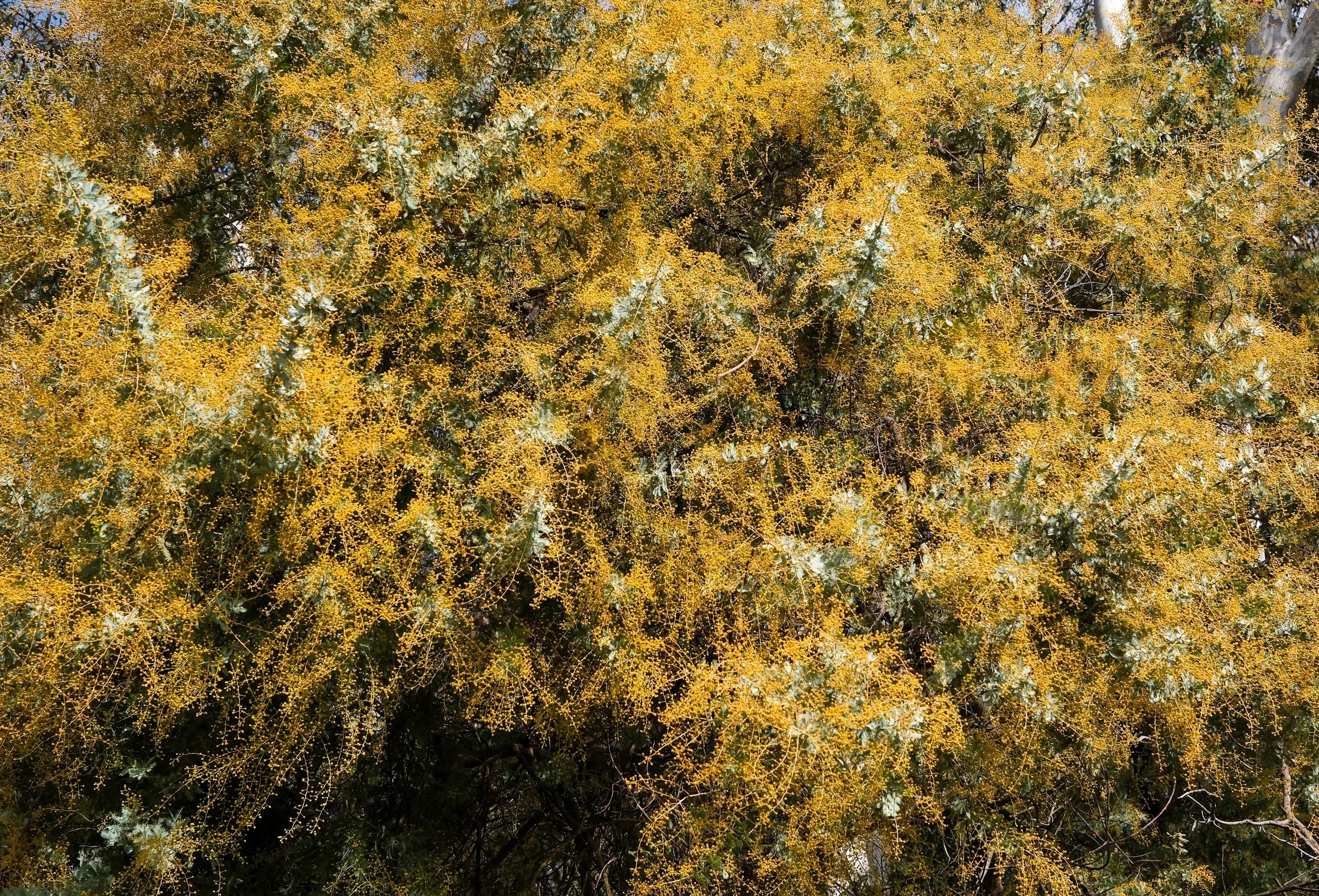
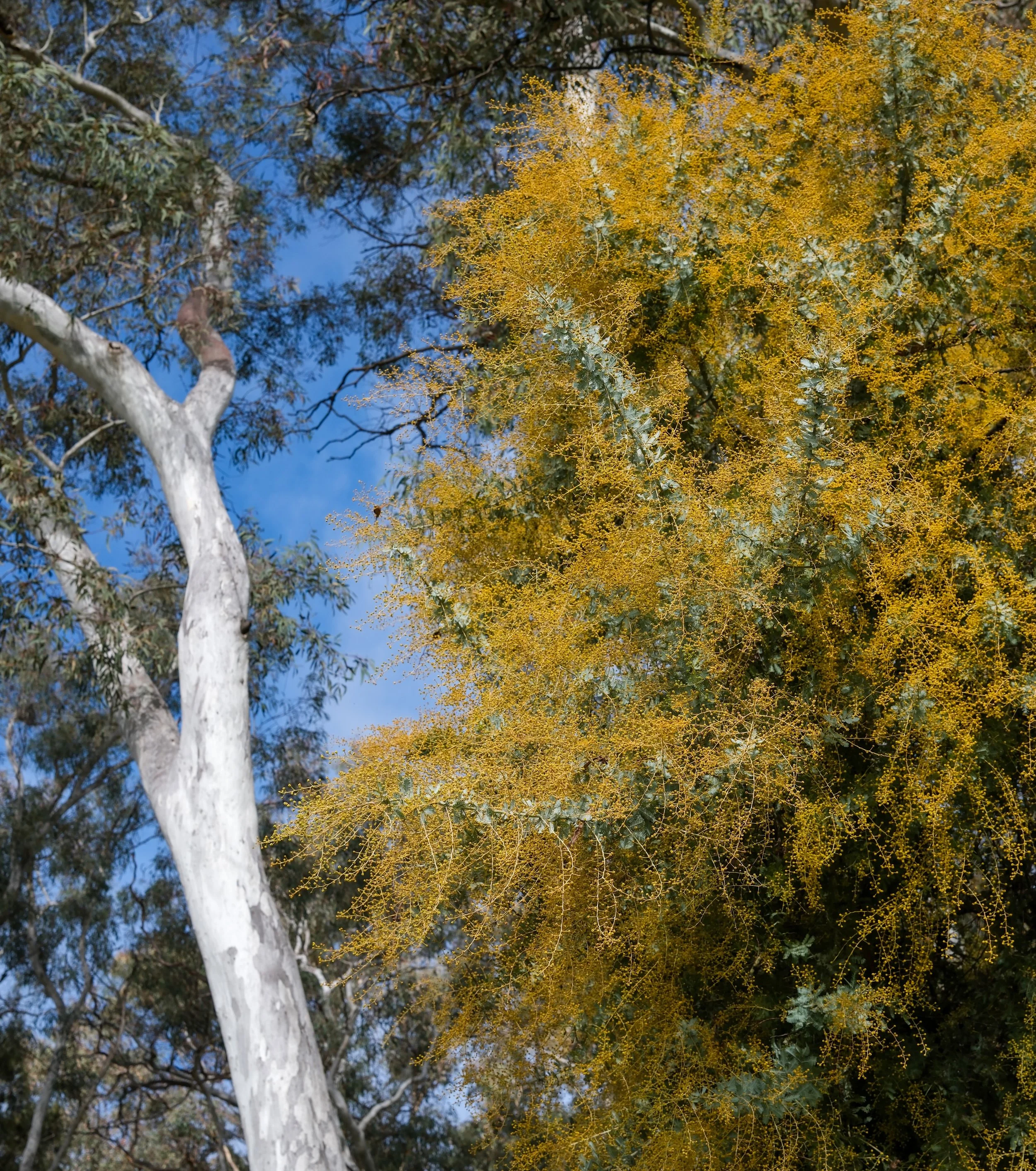
In the depths of an Australian winter, the landscape begins to glow and hum with life. Across our continent, wattles come into flower. Some appear as soft clouds of gold; others as bright spherical blooms held against blue-grey foliage. Along roadsides, through bushland, in gardens and landscapes of scale, wattles bring light to a season often thought of as dormant.
That sense of winter dormancy, however, is largely a northern hemisphere idea. In Australia, winter tells a different seasonal story. It is often luminous, abundant and alive with bloom, and no plant expresses that more beautifully than the wattle. Flowering through our cooler months, wattles remind us that our seasons have their own rhythms, their own moments of abundance, and their own ways of marking the passing of time.
Few plants are as closely entwined with the character of Australia as the wattle. While Acacia occurs elsewhere in the world, Australia is home to more than 1,000 species, growing across almost every kind of environment, from the arid interior to forests, plains and coastal regions. Few plants are as emblematic of the Australian landscape as the wattle.
For those of us who think about gardens through the lens of seasonality, wattles offer a useful reminder: abundance does not belong only to spring.
Part of their magic is the architecture of the flowers themselves. What we recognise as the characteristic spherical pom pom or cylindrical flower spike is made up of many tiny individual flowers. Their numerous stamens create that soft, luminous quality, catching the low winter sun and holding light within the landscape.
Both heroic and familiar, wattles are symbols of a seasonal moment. Wattle is deeply embedded in Australian cultural identity, but its significance extends beyond symbolism. Its flowering is a living expression of season and place: a signal that even in the darker days, the landscape is active.
Many Acacia species are pioneer plants, among the first to establish in landscapes that have been disturbed or disrupted. They can grow quickly, create shelter and contribute to the conditions from which more complex plant communities can develop.
Some are relatively short-lived. A pioneer species does not necessarily need to occupy a landscape forever to make an important contribution, its value may lie in what it enables. A good time, not always a long time.
Wattles are also members of the legume family, Fabaceae, and many Acacia species form relationships with nitrogen-fixing bacteria associated with their roots. Through this microbial partnership, atmospheric nitrogen is converted into forms that plants can use. It is another reminder that plants do not simply occupy a place. Through their relationships with soil, microbes, insects, birds and other plants, they actively participate in making it.
The remarkable diversity of Acacia gives us the opportunity to extend the season of wattle flowering.
Rather than thinking of ‘wattle season’ as a single moment, we can follow a succession of species flowering at different times and in different parts of the country. Australia’s vast range of climates means there is no single national flowering calendar. What is blooming in the arid centre may be very different from what is flowering in a southern coastal landscape.
By selecting species with different flowering periods, gardens can hold moments of abundance beyond the conventional spring peak, creating a longer and more nuanced seasonal rhythm. A flowering calendar can be a way of paying closer attention to the year as it unfolds in this particular place. Perhaps this is what wattles offer most powerfully: a way of noticing.
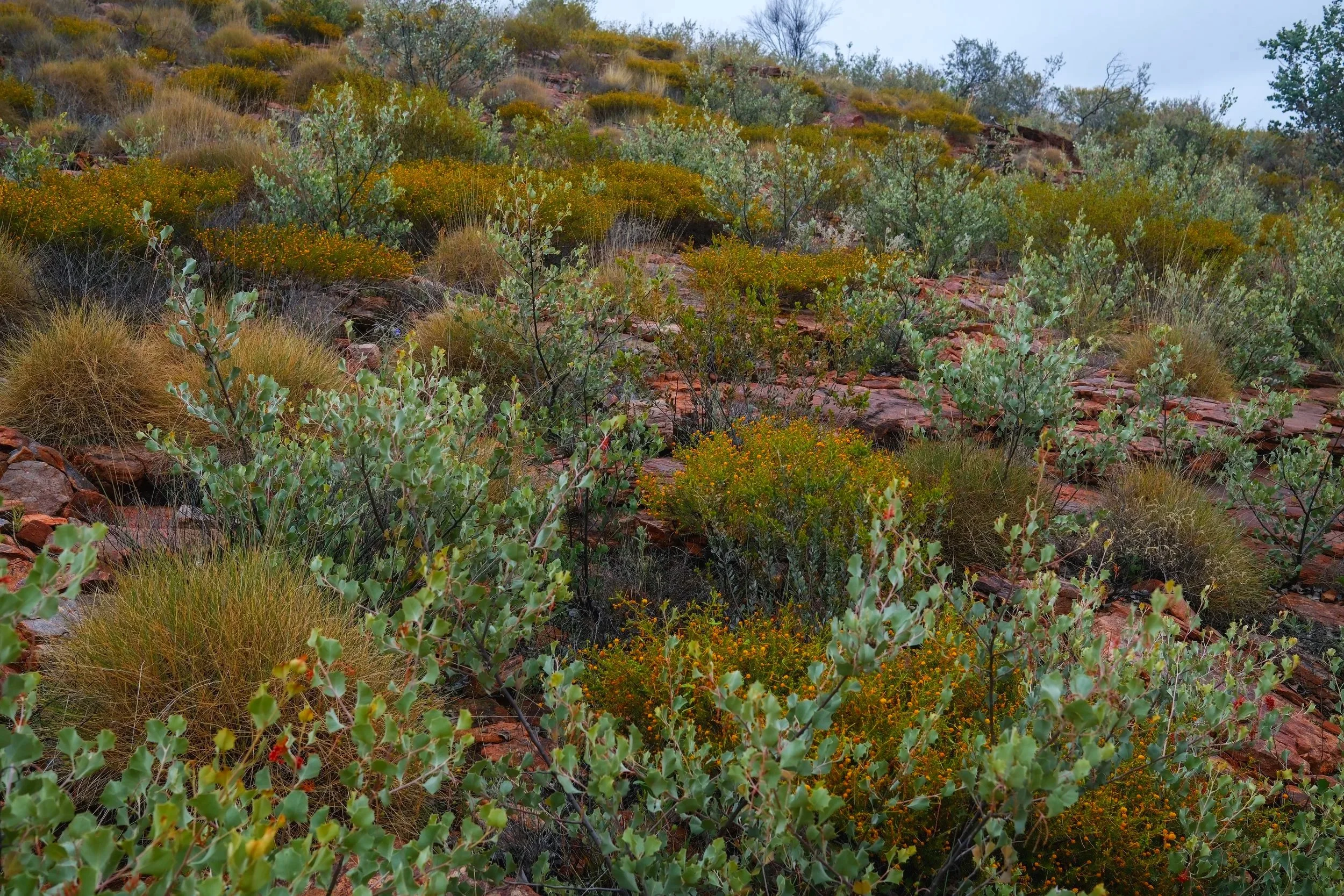
From the red earth around the red interior to cool southern gardens, roadside verges and regenerating bushland, wattles take on different forms while remaining unmistakably themselves. For a time, they turn the landscape gold.
And in doing so, they remind us that every place has its own seasons, its own signals and its own particular character.
From the Super Bloom bookshelf
One of our favourite references is the Australian Native Plants: The Australian Native Plants Society (Australia) Wall Calendar (1982), featuring a remarkable flowering calendar for Australian native plants, including Acacia. Although long out of print, it's well worth seeking out. Keep an eye on second-hand bookshops, garden book sales and online marketplaces—you never know when one might appear. It's a beautiful reminder that understanding seasonality begins with paying attention.