
GROUNDWORK Ed.13
THE DISCIPLINE OF ATTENTION
AN INTERVIEW WITH DR. ANNA LENA HAHN
Practice is often understood as what we do. We practiCe landscape architecture by drawing, planting, specifying and manAGing. But for landscape designer and researcher Dr Anna Lena Hahn, practice is equally about how we learn to see.
Ahead of this year's Beth Chatto Symposium, where Anna Lena joins Jac Semmler and Darryl Moore in conversation, we spoke about observation, uncertainty and the ways that years of practice reshape not only landscapes, but the people who design them.
"Anyone who has lived with a garden knows that the garden changes us as much as we change it," she says.
It's a simple observation, yet it shifts the way we think about expertise. Rather than arriving with answers, Anna Lena believes good practice begins by allowing a place to teach us. Spending time in a landscape reveals patterns, seasonal rhythms and relationships that aren't immediately visible. Walking a site, listening, comparing different perspectives and returning through the seasons all become part of the design process.
"Learning to see is part of learning to design."
Observation, however, is never enough on its own.
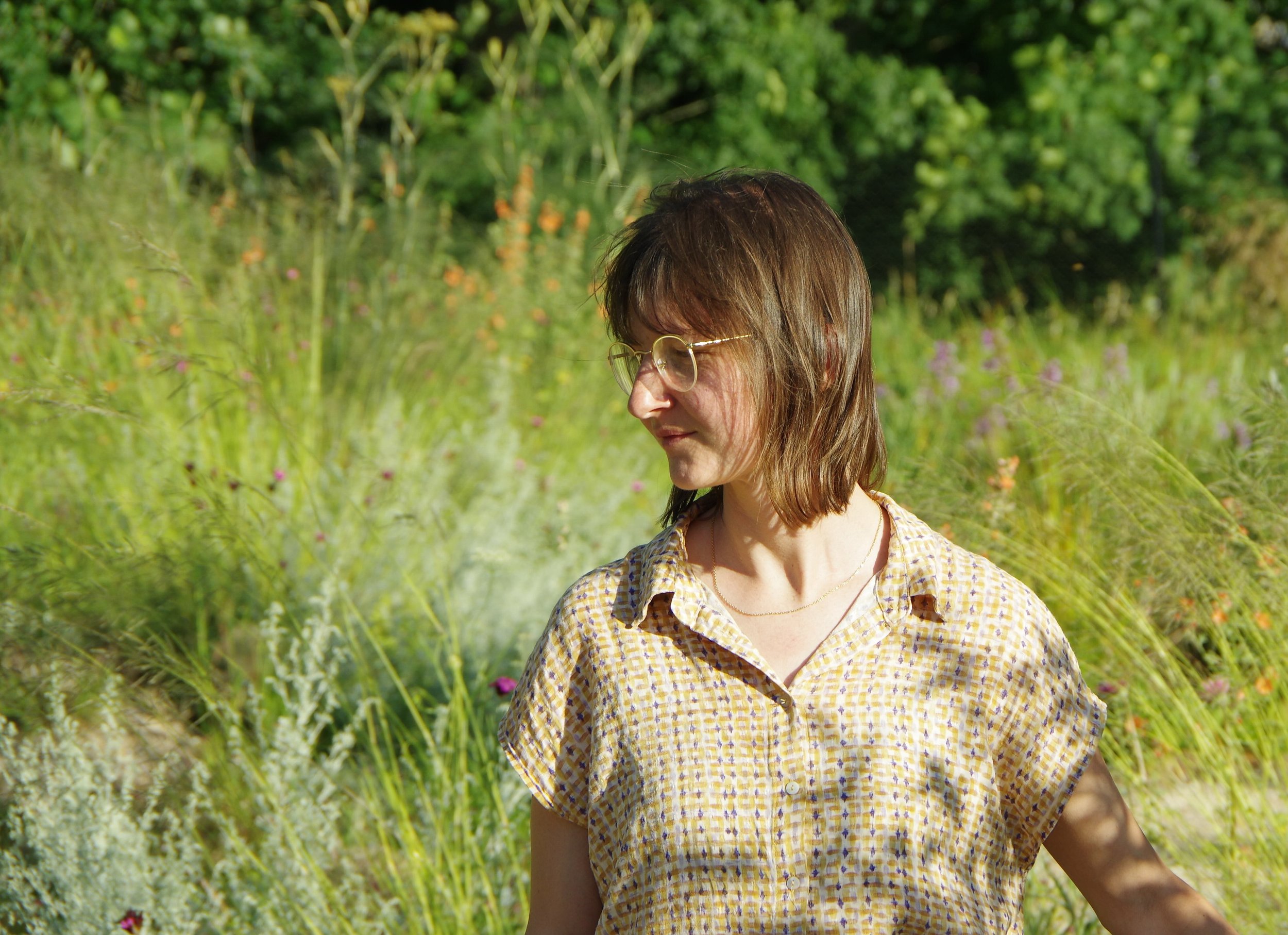
"I am careful not to romanticise observation," Anna Lena explains. "Seeing without acting leaves us unable to respond to the urgent questions of climate adaptation, biodiversity loss or urban heat. Acting without seeing produces generic solutions."
Practice, she says, is the continual movement between observation and intervention.
Growing up in Germany's Ruhr region taught her that disturbance is never simply destruction. Industrialisation profoundly altered these landscapes, yet many also became places of remarkable ecological renewal. Those experiences challenged the idea that nature exists separately from people.
"We live in landscapes shaped by generations of human activity," she says. "I am interested in understanding how people and ecological processes can continue shaping places together."
That way of thinking extends to curiosity itself.
"Curiosity is less a personality trait than a discipline of attention."
Influenced by anthropologist Tim Ingold's writing on craft, Anna Lena describes expertise as something developed through careful engagement rather than the application of fixed knowledge. Every site carries its own soils, climate, maintenance culture, social history and ecological dynamics. Learning to recognise those differences is what prevents landscapes from becoming generic.
One project in particular transformed how she understood her own practice.
Commissioned to convert a grey concrete rooftop at a middle school in Paris into a garden, the brief initially seemed straightforward. The school wanted greenery, but with very little maintenance. Rather than focusing solely on the planting, Anna Lena involved pupils and school technicians throughout the design and establishment of the garden.
Years later, those relationships continue to sustain the project. The technicians care for the planting with genuine commitment, while students use it as a place for learning.
That experience led to a simple but profound realisation.
"If we didn't cultivate relationships between the plants and the people, the design would ultimately fail."
Successful planting design, she realised, is as much about cultivating relationships as arranging plants.
This way of practising also requires becoming comfortable with uncertainty.
"Every design is a speculative gesture," Anna Lena says.
No planting plan unfolds exactly as imagined. Weather changes, species surprise us and landscapes continue evolving long after construction is complete. Rather than designing fixed outcomes, she advocates designing adaptive processes that can respond to change over time.
Mentors such as Bettina Jaugstetter and Cassian Schmidt reinforced this thinking, teaching her to read plants as indicators of broader ecological processes and to design with redundancy, creating plant communities where several species perform similar ecological roles, allowing landscapes to remain resilient even when individual plants fail.
"It is a wonderfully humble way of designing," she reflects, "accepting uncertainty while preparing for it."
Those lessons have become increasingly urgent.
Speaking from France after a summer of prolonged drought, repeated heatwaves and devastating wildfires, Anna Lena describes losing significant numbers of newly planted trees and shrubs across several public projects. The experience reinforced that climate adaptation extends far beyond selecting drought-tolerant species.
"It is equally about how we plant, when we plant and, above all, how we support plants during those critical first years."
Successful establishment, she believes, is becoming one of the defining challenges facing the profession.
Looking back across her career, the lesson that no university or mentor could have taught her is patience.
Landscapes reveal themselves slowly. Relationships take time to build. Ecological processes cannot be rushed. The longer she has practised, the more she has realised that good work depends on giving both places and people the time they need.
Perhaps that is why communities of practice matter so deeply.
Reflecting on this year's Beth Chatto Symposium, Anna Lena speaks not first about expertise, but generosity. She describes the planting design community as one where practitioners openly exchange ideas, discuss failures alongside successes and continue learning from one another.
"Good practice is never produced in isolation," she says. "It grows through relationships, dialogue and the willingness to keep learning."
If practice is often understood as what we do, Anna Lena offers another definition. Practice is how we learn to pay attention, to places, people, ecological relationships and the conditions that shape them over time. It is not a destination or a body of knowledge to master, but a way of looking that continues to evolve, project after project.
Join Anna Lena Hahn, Darryl Moore and Jac Semmler as they explore the ways plants, people and practice are connected at this year’s Beth Chatto Symposium.
Tune in via livestream or discover more about the programme and speakers via the Beth Chatto Symposium website.
Dr Anna Lena Hahn is a landscape designer, researcher and lecturer based in Angers, France. Growing up in Germany’s Ruhr region shaped her interest in ecological landscape design as a way of working with transformed landscapes and supporting ecological renewal. Through her research and practice, she explores the relationships between plants, people and place, with a focus on disturbance ecology, climate adaptation and naturalistic planting design. As co-founder of Atelier Za’atar, Anna Lena works across landscape design, mediation and education, bringing together careful observation, ecological thinking and collaborative practice.
Instagram: @annalena_hahn
Website: www.annalena-hahn.com