GROUNDWORK Ed.11
Applying Gravel Garden Principles to Dry-Summer Climates
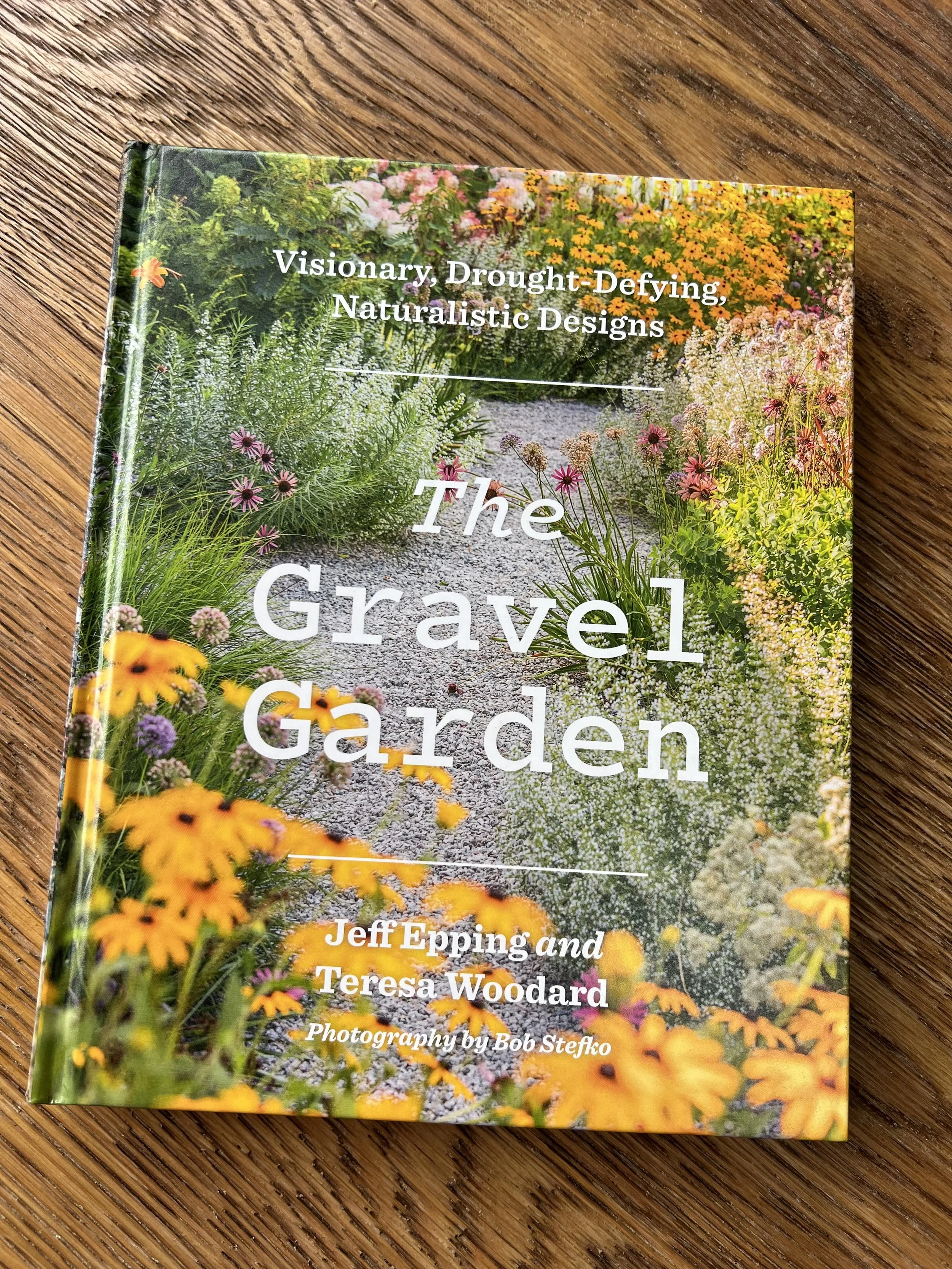
New Release: The Gravel Garden: Visionary, Drought-Defying, Naturalistic Designs by Jeff Epping and Teresa Woodward is changing the way we think about gardening.
Through stories of gravel gardens and the people who cultivate them, the book explores an approach to planting that is gaining attention for its beauty, resilience and reduced management. For those of us working in dry-summer climates, it prompts a compelling question: what can we learn from gravel gardening, and how might we apply its principles to our own landscapes?
At Super Bloom, many of the principles explored in the book are already informing our work across both public landscapes and private spaces, where we're continually testing approaches that support resilient, climate-responsive planting in Australia's dry-summer conditions.
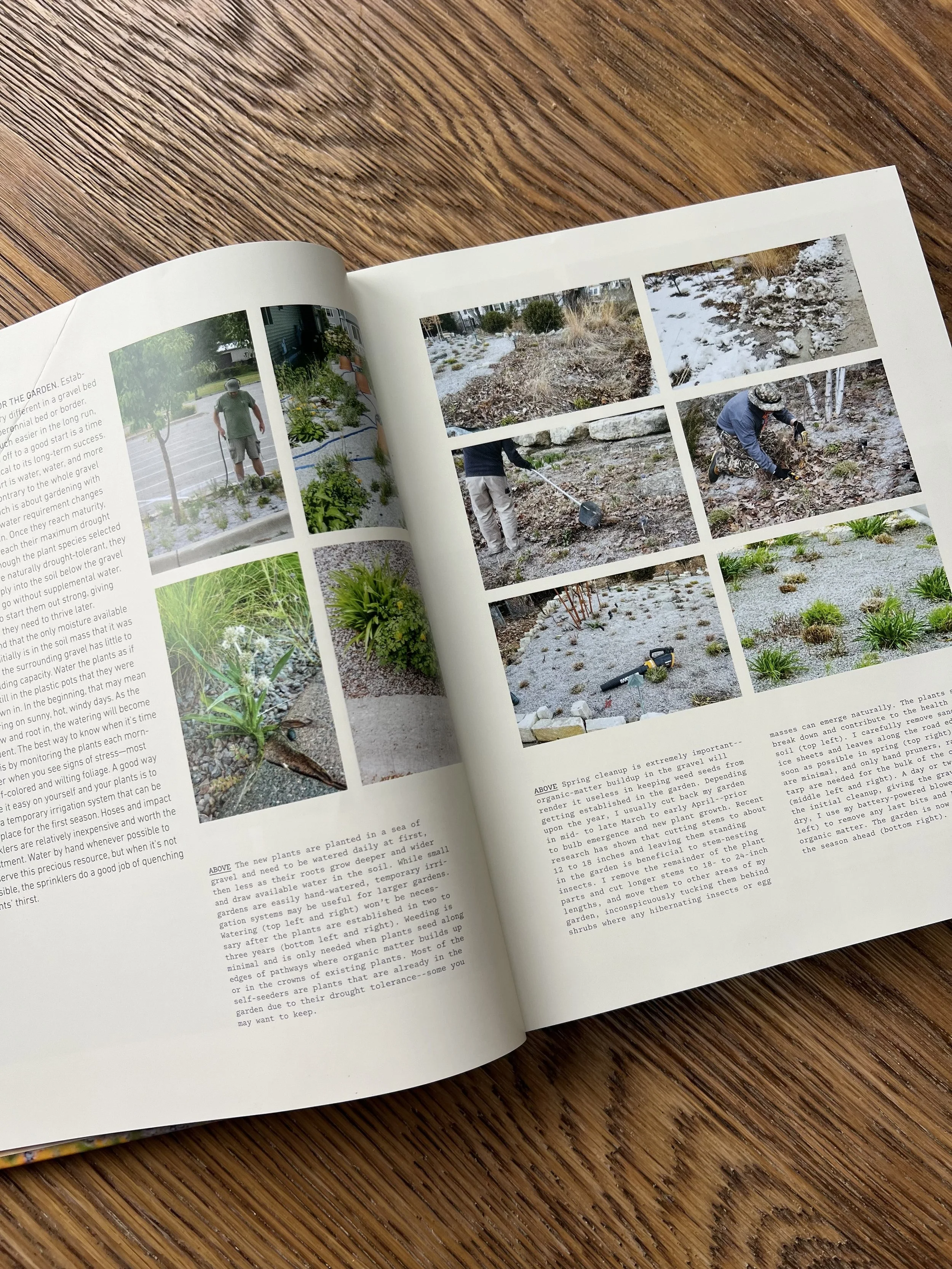
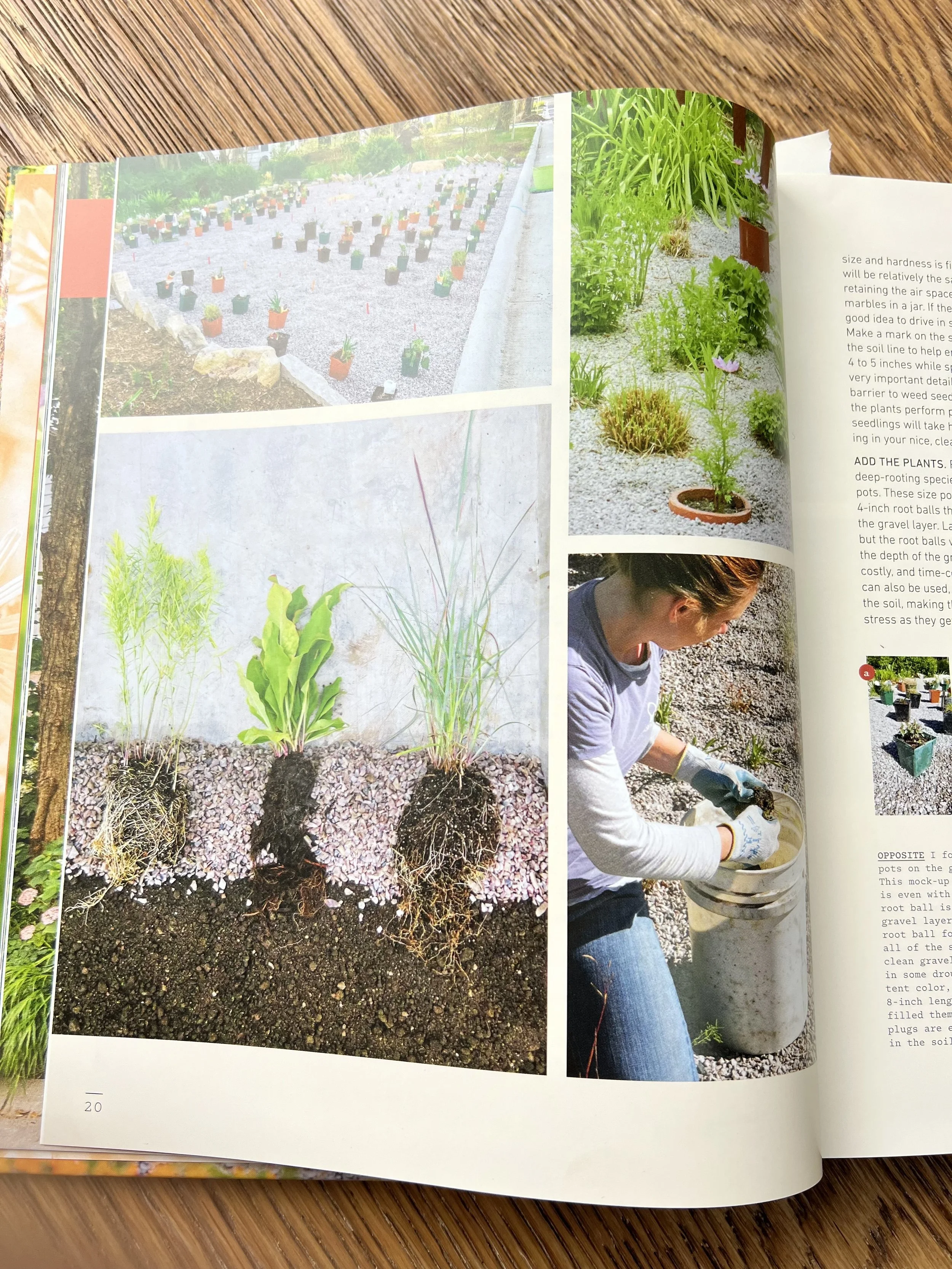
At its simplest, gravel gardening replaces organic mulches such as bark, compost or woodchip with a deep layer of mineral mulch. Plants establish through this gravel layer before extending their roots into the soil below.
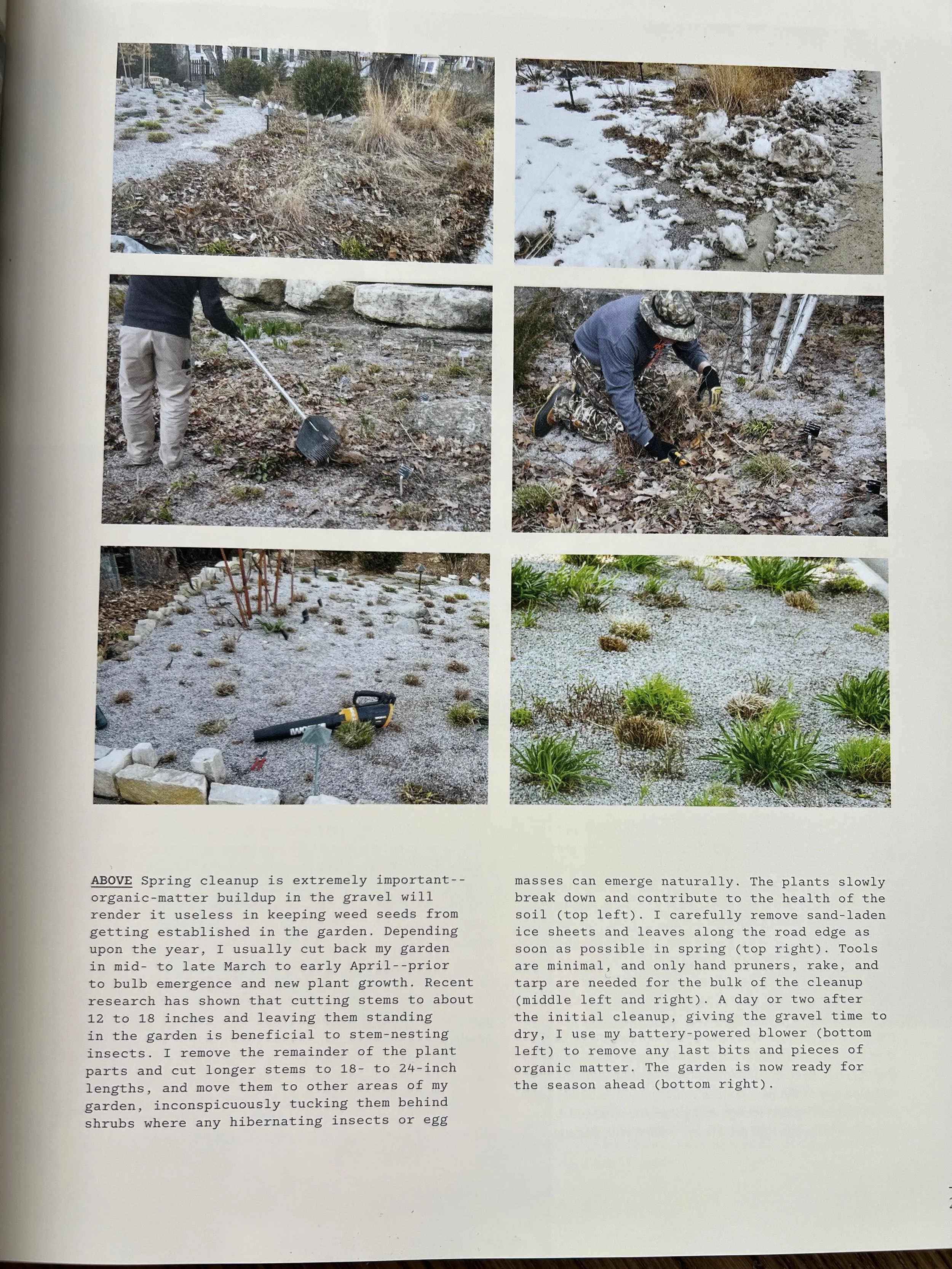
Gravel of an appropriate particle size, free from fine material or dust, creates a less hospitable environment for unwanted plants to germinate. Fewer weeds mean less disturbance, reduced maintenance and the opportunity for more stable planting communities. These are qualities we're increasingly drawing on in Super Bloom's own work, where mineral mulches are helping support richly layered, climate-adapted planting in both public and private projects.
Plants respond opportunistically to where water is available. Light rainfall or frequent, low-volume irrigation can concentrate moisture near the surface, encouraging shallow root systems. Mineral mulch allows water to move through the gravel and into the soil below, supporting deeper root establishment, an important consideration as summers become hotter, longer and more extreme.
While the book focuses primarily on deeply rooted perennials, our own experience at Super Bloom has shown that these principles can be successfully applied across a much wider palette of lifeforms. Shrubs, subshrubs, succulents and selected geophytes have all responded beautifully when established using gravel garden principles, opening up exciting possibilities for resilient, richly layered planting in dry-summer climates.
These ideas are already being tested and adapted across dry-summer climates. On a recent plant and project nerding road trip through America’s Southwest, Jac Semmler visited practitioners including Kevin Philip Williams of Denver Botanic Gardens (and co-author of Shrouded in Light) and Kenton Seth, thrilling plant practitioner in the aridity of Fruitia, Colorado (co-author of The Crevice Garden), who are using 100mm layers of mineral mulch for both planting and seeding in dry-summer microclimates. Closer to home, Bill Bampton and Julie Willis pioneered a gravel garden at Heronswood on Victoria’s Mornington Peninsula, demonstrating the technique’s potential for both climate compatibility and beauty.
Beauty too, is always a consideration and it is worth noting that gravel gardens are not a garden dominated by gravel, moreover a densely planting thriving ecosystem, where plants establish and as their canopies meet, this causes the gravel to disappear from view.A means of management plant driven gardens and landscapes.
There are environmental questions, too. Gravel is a mined, non-renewable resource. At Super Bloom, we are currently researching the use of crushed concrete as a recycled alternative, successfully growing modules of planting communities using the material as both substrate and mineral mulch.
There is no single gravel garden formula to import wholesale from one climate to another.We see this as the book’s most useful lesson. A technique in itself isn’t the answer, but it does give us something to observe, question, test and adapt to place.
The Gravel Garden: Visionary, Drought-Defying, Naturalistic Designs by Jeff Epping and Teresa Woodward. Published by Timber Press
To source the title from Australian bookstores
For more information on gravel garden techniques or approaches